Saturday, January 31, 2026

1 Chronicles 16: Lessons From David on the Elements of Spirit-Led Praise For God

 1 Chronicles 16: Lessons From David on the Elements of Spirit-Led Praise For God

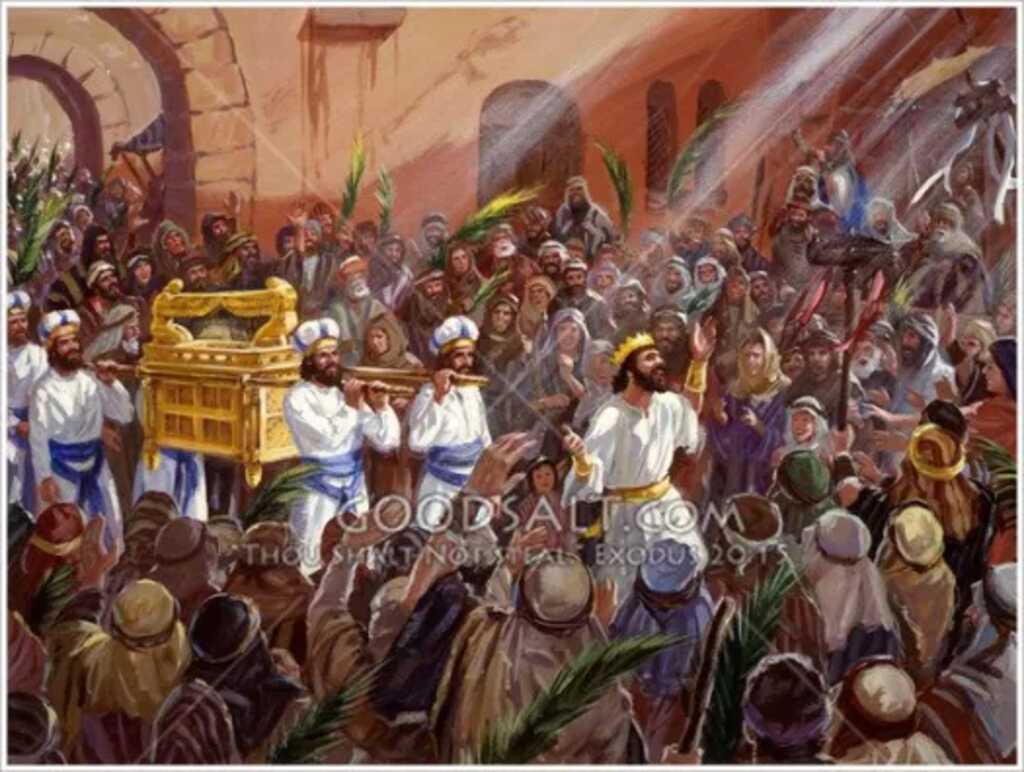
Introduction: Upon the return of the ark, David led the Jews in praising God. 

From his example, God reveals seven lessons on Spirit-led praise. 

These include: 

(1) faith in Jesus Christ, 

(2) worship, 

(3) thanksgiving, 

(4) obedience, 

(5) dependence, 

(6) submission, 

and (7) continuity.


First, David began the celebration of the return of the ark with blood sacrifices to atone for the Jews’ sins and to restore fellowship with God. These sacrifices, however, required faith. Today, Spirit-led praise should also include faith and praise for Jesus’ atoning sacrifice. 

Second, David then appointed Levites to lead the Jews in joyful worship. From their example, God reveals that Spirit-led praise for God should include joyful worship. 

Third, David led the Jews in thanksgiving for all God had done for them. From his example, God reveals that praise for Him should include thanksgiving for His faithfulness. 

Fourth, David encouraged the Jews to remember God’s Covenant. Their obedience brought blessings, and their disobedience brought curses. From David’s reminder, God reveals that Spirit-led praise should include obedience. 

Fifth, David gave thanks for God’s protection over His anointed ones. That protection was available anytime the Jews submitted to Him. God also wants your worship to include dependence upon His protection. 

Sixth, David showed his faith by submitting to and praising the Creator of the universe. Your worship should also include submission to and trust in the power of the Creator to do all things. 

Finally, David’s reforms ensured that worship was an ongoing process. Your Spirit-led praise should also be an ongoing process within the Body of Christ.


1. Faith in Jesus: Spirit-Led Praise Begins With Faith in Jesus’ Sacrifice. 1 Chr. 16:1-3.

David leads the Jews in burnt and peace offerings out of gratitude. After celebrating the return of the ark, David placed it in a Tabernacle for worship and used it for its intended purpose to bless God’s people. His dedication of the ark in its new Tabernacle included burnt offerings and peace offerings to atone for the people’s sins and to restore fellowship with God: “1 And they brought in the ark of God and placed it inside the tent which David had pitched for it, and they offered burnt offerings and peace offerings before God. 2 When David had finished offering the burnt offering and the peace offerings, he blessed the people in the name of the Lord. 3 He distributed to everyone of Israel, both man and woman, to everyone a loaf of bread and a portion of meat and a raisin cake.” (1 Chr. 16:1-3; 2 Samuel 6:17-18). 

The ark was meant to bring the people into fellowship with God for Him to bless them. Yet, before they could do this, the Jews needed to first restore the sacrificial system that God ordained under Moses. As the King of Israel, this was one of the most important things that David did for God’s people.
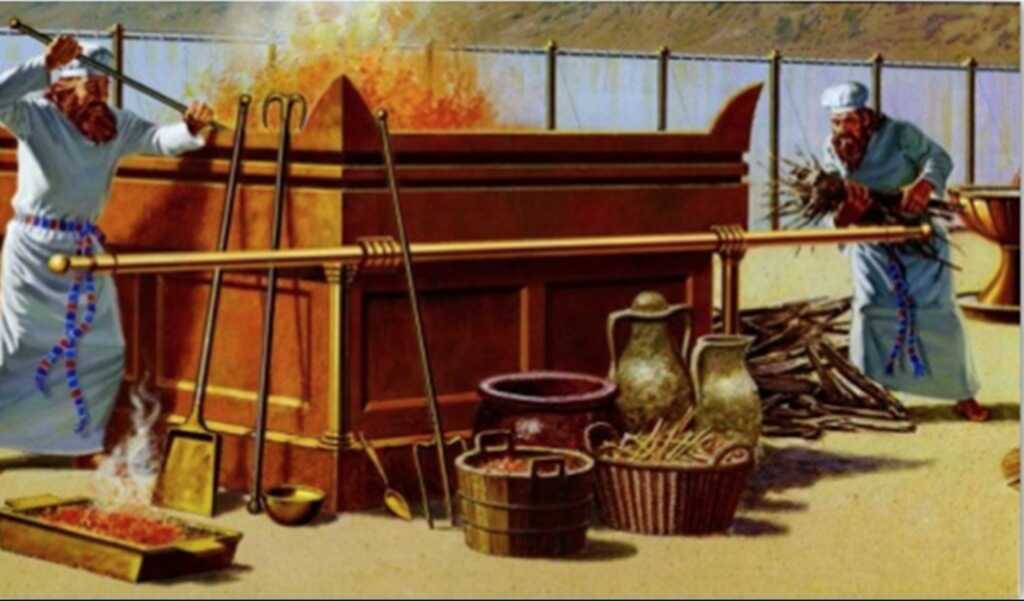
Under David’s leadership, the priests offered burnt offerings and peace offerings


Without faith in Jesus’ atoning sacrifice, you cannot receive His atonement

The blood sacrifices were necessary to atone for sin.

 ‘“For the life of the flesh is in the blood, and I have given it to you on the altar to make atonement for your souls; for it is the blood by reason of the life that makes atonement.”’ (Lev. 17:11; Hebrews 9:22). 

But the Jews had to have faith in the sacrifice for it to have any value. 

In a similar way, you must have faith in Jesus’ sacrifice for His atoning death to cleanse you of your sins. “and everyone who lives and believes in Me will never die. Do you believe this?” (John 11:26). 

“Truly, truly, I say to you, he who believes has eternal life.” (John 6:47). 

“He who believes in the Son has eternal life; but he who does not obey the Son will not see life, but the wrath of God abides on him.” (John 3:36). 

If you believe, give thanks for His sacrifice for you.


Thank Jesus by seeking fellowship through His Word. 

There are three symbols of God’s fellowship in this account. 

First, David celebrated the return of the ark with a “peace” offering (1 Chr. 16:2; 2 Samuel 6:18). 

The peace offering was a voluntary offering that symbolized a life of fellowship with God (Lev. Chapter 3). 

Second, the contents of the ark included a golden jar with some of the manna that rained down from heaven for 40 years to sustain the Jews in the wilderness (Hebrews 9:4; Exodus 16:32-34). 

This symbolized Jesus’ provision and His fellowship. He was the bread of life that rained down on the Jews in the wilderness: “I am the bread of life. Your fathers ate the manna in the wilderness, and they died. This is the bread which comes down out of heaven, so that one may eat of it and not die. I am the living bread that came down out of heaven; if anyone eats of this bread, he will live forever; and the bread also which I will give for the life of the world is My flesh.” (John 6:48-51). 

He is also the Word who became flesh (John 1:1, 14). 

Third, within the Tent of Meeting near the ark, God commanded that the Jews keep 12 holy loaves of bread (Exodus 25:23-30). 

The purpose of the bread was to show God’s desire for fellowship with His people by allowing them to symbolically dine with Him. 

Dining together was considered in Jewish culture to be an intimate act of friendship. 

Jesus also offers to “dine” with any person who opens the door of their heart to Him (Revelation 3:20). 

His bread was meant for you to eat in communion with Him (Revelation 1:6; 5:10). 

Are you consuming the bread of life to stay in communion with Jesus?


Provide for God’s people

David gave bread to all the people (1 Chr. 16:7; 2 Samuel 6:19). 

As symbolized by the 12 loaves, Jesus promises to feed everyone who seeks after Him (Matthew 6:25-34). 

These instructions also symbolically apply to all of God’s believers (1 Peter 2:5, 9). 

Like the bread that God offered to all His tribes, He wants you to provide for those in need. 

Today, Jesus’ “food” is doing God’s will: “Jesus said to them, ‘My food is to do the will of Him who sent Me and to accomplish His work.’” (John 4:34). 

Serving God by helping others is also one part of “undefiled religion”. (James 1:27). 

Does your worship include helping others? 

Or, are you only feeding yourself?


Use God’s blessings to bless others

David also used the ark for its intended purpose to bless others: “Then all the people departed each to his house, and David returned to bless his household.” (1 Chr. 16:43).

Most of the great leaders of the Bible gave blessings to their people. 

For example, with Noah’s final recorded words, he blessed and gave prophetic words for his children (Genesis 9:24-27). 

At a time when Isaac incorrectly thought that he was about to die, he sought to bless his eldest son Esau. Yet, he was tricked into giving that blessing to Jacob (Genesis 27:34-41). 

At the end of his life, Jacob blessed and gave prophetic words to each of his 12 sons (Genesis 49). 

At Moses’ prompting, Aaron blessed the people in God’s name (Numbers 6:22-27). 

In Moses’ final words, he blessed the 12 tribes of Israel in God’s name (Deuteronomy 33:1). 

Solomon also blessed the people after he dedicated the Temple: “Then the king faced about and blessed all the assembly of Israel, while all the assembly of Israel was standing.” (1 Kings 8:14, 55). 

Jesus also promised a blessing with His final words: “I am with you always, even to the end of the age.” (Matthew 28:20). 

Apostle Paul also offered a prayer of blessings to others (2 Corinthians 13:14). 

Today, a blessing at the end of a church service is called a prayer of “benediction.” 

You should also be looking for ways to bless others. 

Believers should also pray for God to bless others. 

Your goal should never be to condemn a sinner. 

That is what Satan does as the accuser of the brethren (Revelation 12:10). 

Instead, your goal should be to restore the person who has sinned: “Brethren, even if anyone is caught in any trespass, you who are spiritual, restores such a one in a spirit of gentleness; each one looking to yourself, so that you too will not be tempted.” (Galatians 6:1). 

When was the last time that you prayed for God to bless someone else outside of your immediate family?


2. Worship: Spirit-Led Praise to God Should Include Joyful Worship. 1 Chr. 16:4-6.

David appoints worship leaders to lead the Jews in worship

David also selected leaders to lead the Jews in worship: “4 He appointed some of the Levites as ministers before the ark of the Lord, even to celebrate and to thank and praise the Lord God of Israel: 5Asaph the chief, and second to him Zechariah, then Jeiel, Shemiramoth, Jehiel, Mattithiah, Eliab, Benaiah, Obed-edom and Jeiel, with musical instruments, harps, lyres; also Asaph played loud-sounding cymbals, 6 and Benaiah and Jahaziel the priests blew trumpets continually before the ark of the covenant of God.” (1 Chr. 16:4-6). 

Within the three clans of Levi, each had an important worship leader or leader of a temple choir. 

Within the clan of Kohath, this was Heman (1 Chr. 6:33-38). 

Within the clan of Gershon, this was Asaph (1 Chr. 6:39-43). 

Within the clan of Merari, this was Ethan (1 Chr. 6:44-47). 

These three leaders appointed persons as worship leaders, singers, musicians, and possibly dancers (1 Chr. 15:16-24; 16:4-43; 25:1). 

Everyone has a role in worship.
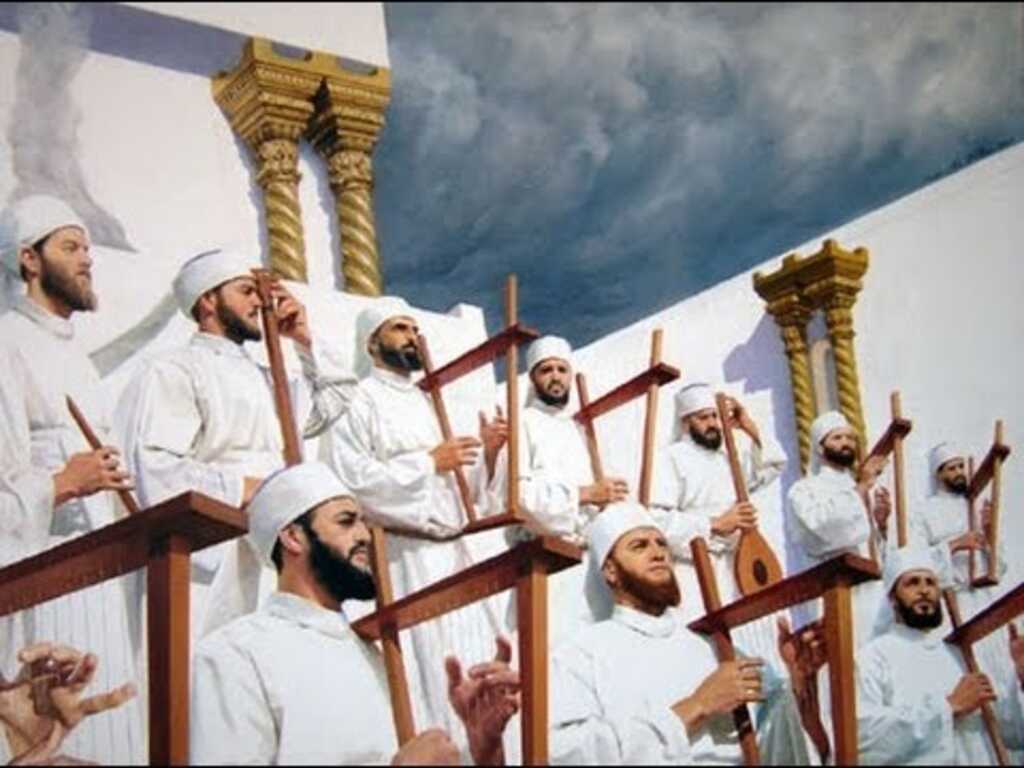
Under David’s leadership, the Levites led 

the Jews in worship


Worship is important for your relationship with God

Worship plays an important role in preparing your heart to receive the Word. 

David understood the importance of worship. 

Thus, he “spoke to the chiefs of the Levites to appoint their relatives the singers, with instruments of music, harps, lyres, loud-sounding cymbals, to raise sounds of joy.” (1 Chr. 15:16). 

“The priests stood at their posts, and the Levites also, with the instruments of music to the LORD, which King David had made for giving praise to the LORD—‘for His lovingkindness is everlasting’ -- whenever he gave praise by their means, while the priests on the other side blew trumpets; and all Israel was standing.”’ (2 Chr. 7:6). 

He had four thousand Levites assigned to perform worship services (1 Chr. 16:31; 23:5).


Be filled with joyful worship

Worship can also bring you joy and prepare your heart to praise God: “Then those who sing as well as those who play the flutes shall say, ‘All my springs of joy are in you.’” (Psalm 87:7; 126:2; Job 8:21; Psalm 51:14). 

“Through Him then, let us continually offer up a sacrifice of praise to God, that is, the fruit of lips that give thanks to His name.” (Hebrews 13:15). 

Is there joy in your worship?


Dancing can also be a part of worship

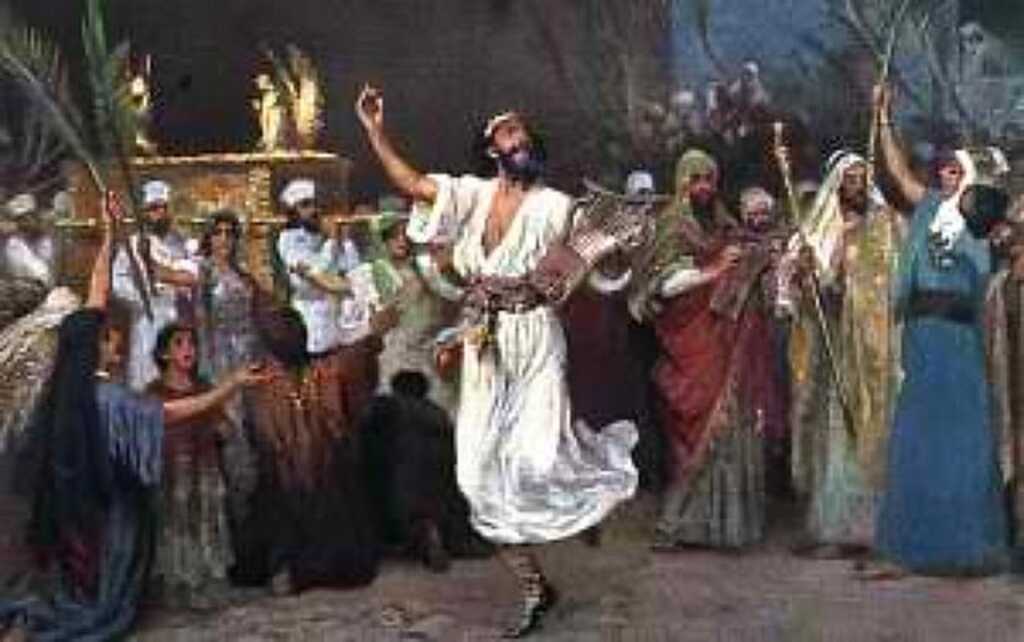
Dancing was also meant to be part of worship (Psalm 30:11). 

When God delivered the Jews from Pharaoh’s army, Miriam included both song and dance as part of her celebration (Exodus 15:20-21). 

Solomon also wrote that there is a time for celebration that includes dancing (Ecclesiastes 3:4). 

God gave us the rhythm to dance to worship Him. 

Thus, in heaven, our songs of praise will likely be accompanied by dancing. 

Sadly, Satan has corrupted most forms of dance.


Give thanks for your redemption that Jesus made possible

The priests also blew trumpets of silver: “Make yourself two trumpets of silver, of hammered work you shall make them; and you shall use them for summoning the congregation and for having the camps set out.” (Numbers 10:2). 

Silver was a sign of redemption. 

For example, silver shekels foreshadow the ransom price that Jesus paid as a ransom for our broken vows before God (Matthew 26:14-16). 

Trumpets will also herald Jesus’ return (1 Thessalonians 4:13-18). 

Your worship should include gratitude for your redemption that Jesus made possible.


3. Thanksgiving: Praise Includes Thanksgiving for God’s Faithfulness. 1 Chr. 16:7-13.

David prepares a psalm of thanksgiving

After leading the Jews in restoring the sacrifices and worship celebrations that God ordained, David then led the Jews in a psalm of thanksgiving for God’s mighty and faithful words: “7 Then on that day David first assigned Asaph and his relatives to give thanks to the Lord. 8 Oh give thanks to the Lord, call upon His name; make known His deeds among the peoples. 9 Sing to Him, sing praises to Him; speak of all His wonders. 10 Glory in His holy name; let the heart of those who seek the Lord be glad. 11 Seek the Lord and His strength; seek His face continually. 12 Remember His wonderful deeds which He has done, His marvels and the judgments from His mouth, 13 O seed of Israel His servant, sons of Jacob, His chosen ones!” (1 Chr. 16:7-13). 

David’s psalm had several components. 

This part celebrated God’s faithfulness and His mighty works. 

God made a covenant with the Jews through Abraham, Isaac, and Jacob. 

God proved Himself faithful to always keep His Word.
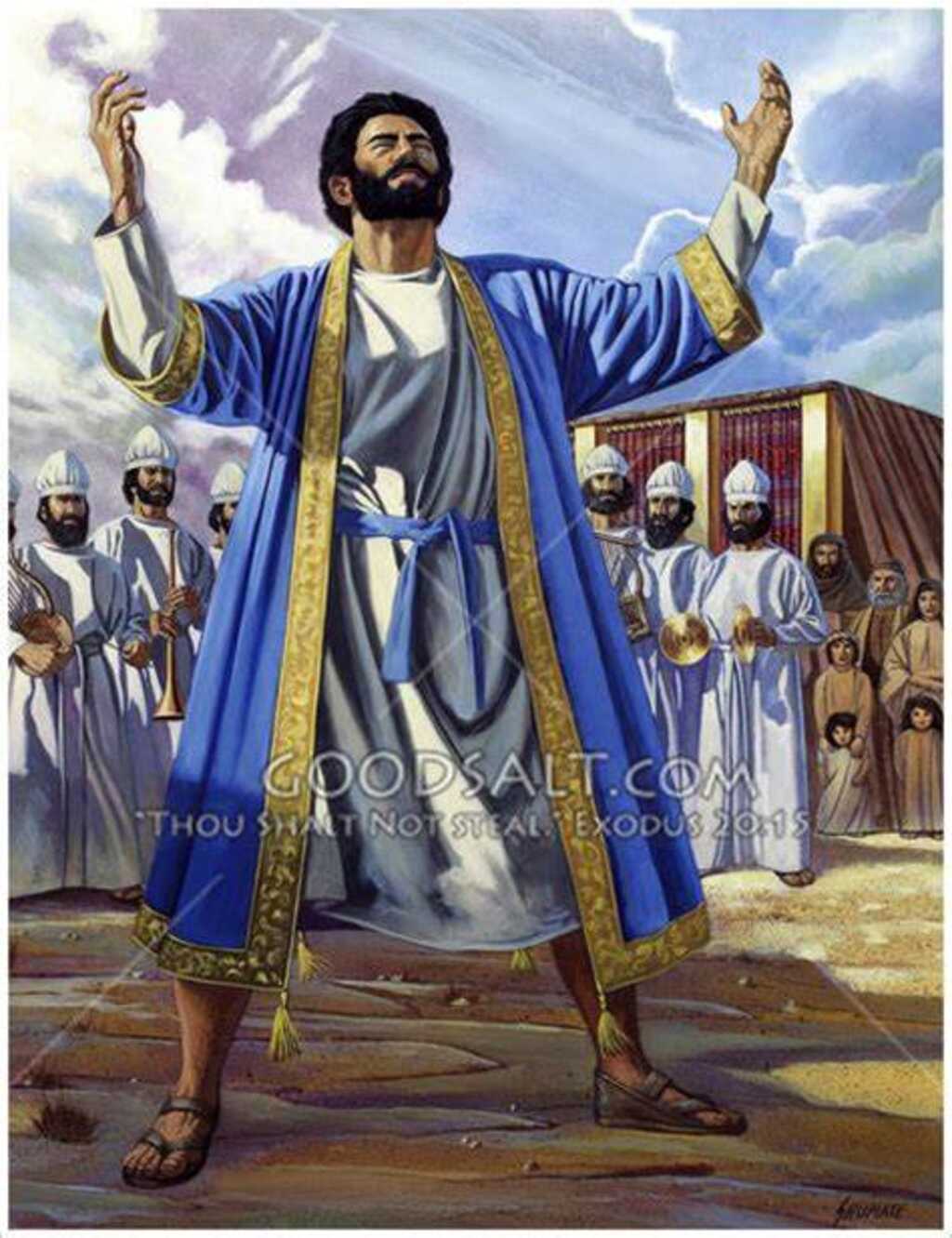

(David led the Jews in giving thanks to God)

Be grateful for God’s faithfulness and His miracles. As an example for believers to follow, the psalmists praised God for all His mighty works for His people: “Oh give thanks to the LORD, call upon His name; make known His deeds among the peoples.” (Ps. 105:1). “One generation shall praise Your works to another, and shall declare Your mighty acts . . . To make known to the sons of men Your mighty acts and the glory of the majesty of Your kingdom.” (Ps. 145:4, 12). “Who can speak of the mighty deeds of the LORD, or can show forth all His praise?” (Ps. 106:2). Isaiah also sang a similar song of praise: “And in that day you will say, ‘Give thanks to the LORD, call on His name. Make known His deeds among the peoples; make them remember that His name is exalted.’” (Is. 12:4). Job also sang a similar song of praise: “Remember that you should exalt His work, of which men have sung.” (Job 36:24). Your gratitude should include thanks for God’s many acts of deliverance and miracles in your life.


Be grateful that God is faithful even when you are not. 

God’s faithfulness is a sign of His grace. 

The Jews did nothing to deserve it. 

You also can celebrate that God is faithful even when your faith fails you and you disobey God: “If we are faithless, He remains faithful, for He cannot deny Himself.” (2 Timothy 2:13). 

Thus, your gratitude should include thanksgiving for God’s forgiveness for your sins.


Be grateful that God is faithful to strengthen you when you call upon Him

David exhorted the people to “Seek the Lord and His strength; seek His face continually.” (1 Chr. 16:11). 

Today, you can turn to Jesus Christ whenever you need strength: “I can do all things through Him who strengthens me.” (Philippians 4:13). 

“that He would grant you, according to the riches of His glory, to be strengthened with power through His Spirit in the inner man,” (Ephesians 3:16). 

“I thank Christ Jesus our Lord, who has strengthened me, because He considered me faithful, putting me into service,” (1 Timothy 1:12).


Record God’s works in your life and repeat them to others

The Jews studied the Old Testament to remind themselves of God’s great works from Genesis through their return from exile. 

God has also likely done incredible things in your life or in the lives of those you care about. 

Celebrate God’s works by recording them and sharing them with others.


Respond to God’s faithfulness by being faithful

If you are grateful for God’s faithfulness, show your gratitude by being faithful to Him. 

Jesus bought your body for a terrible price. 

Thus, you should glorify Him with your body (1 Corinthians 6:20; 7:23).


4. Obedience: Spirit-Led Praise to God Should Include Obedience. 1 Chr. 16:14-19.

David exhorts the Jews to remember God’s covenant. 

After giving thanks for God’s faithfulness, David called upon the Jews to remember God’s covenant: “¹⁴ He is the Lord our God; His judgments are in all the earth. ¹⁵ Remember His covenant forever, the word which He commanded to a thousand generations, ¹⁶ the covenant which He made with Abraham, and His oath to Isaac. ¹⁷ He also confirmed it to Jacob for a statute, to Israel as an everlasting covenant, ¹⁸ saying, “To you I will give the land of Canaan, as the portion of your inheritance.” ¹⁹ When they were only a few in number, very few, and strangers in it,” (1 Chr. 16:14-19). 

God was faithful to keep His Covenant with the Jews. 

He built them into a mighty nation. 

Under the leadership of first Joshua and later David, God gave the Jews all of the Promised Land. 

Yet, the author of Chronicles records this to remind the Jews that God’s Covenant also included His warnings of judgment if the Jews disobeyed Him. 

The Jews were warned not to repeat their mistakes.


God was faithful to keep His Covenant with the Jews

On seven occasions, God promised Abraham that His Covenant would include making a great nation out of him with countless future descendants: 

(1) Genesis 12:3(b); 

(2) Genesis 13:16; 

(3) Genesis 15:5; 

(4) Genesis 16:10; 

(5) Genesis 17:4-5; 

(6) Genesis 18:18; 

(7) Genesis 22:18. 

At Beersheba, God affirmed this same covenant with Isaac (Genesis 26:23-25). 

In a quote that Jacob (Israel) attributed to God, Isaac promised that Israel’s descendants would become a great nation. “May God Almighty bless you and make you fruitful and multiply you, that you may become a company of peoples.” (Genesis 28:3). 

At Bethel, God also confirmed His Covenant with Jacob (Israel). (Genesis 28:13-15). 

Jacob (Israel) later left the Promised Land for Egypt with a tribe of the 70 descendants (Genesis 46:27; Exodus 1:5; Deuteronomy 10:22). 

When the Jews left from Egypt 400 years later, there were 603,550 men of fighting age (Numbers 1:46) and a general population that would have been more than twice that amount. 

Before the Jews entered the Promised Land, Moses celebrated God’s faithfulness to keep His Covenant: “God was faithfulness in keeping His promises to Abraham: ‘Know therefore that the LORD your God, He is God, the faithful God, who keeps His covenant and His lovingkindness to a thousandth generation with those who love Him and keep His commandments;”’ (Deuteronomy 7:9). 

Through Joshua and then David, God was faithful to give the Jews the Promised Land (2 Samuel 8:1-15). 

David, however, warned that: “His judgments are in all the earth.” (1 Chr. 16:14). 

The Jews ignored these and many other warnings. 

They were not faithful to keep God’s Covenant. 

God warned that their disobedience would result in their defeat, exile, and population collapse (Deuteronomy 28:15-68). 

And that was exactly what happened to the Jews. 

The author of Chronicles wanted the Jews to celebrate God’s faithfulness in bringing them back from exile. But he did not want the Jews to repeat their mistakes.


You can also trust in Jesus’ Covenant with you. Jesus created a New Covenant with His sacrifice at the cross (Luke 22:20). 

You can also trust Jesus’ faithfulness to keep His Covenant with you. “Faithful is He who calls you, and He also will bring it to pass” (1 Thessalonians 5:24). 

“God is faithful, through whom you were called into fellowship with His Son, Jesus Christ our Lord.” (1 Cor. 1:9). 

You can respond by staying faithful to Him.


Obedience shows that your worship and gratitude to Jesus is sincere

A believer may proclaim Jesus as Lord. 

Yet, Jesus is not your Lord if you disobey Him: “Not everyone who says to Me, ‘Lord, Lord,’ will enter the kingdom of heaven, but he who does the will of My Father who is in heaven will enter.” (Matthew 7:21). 

“Why do you call Me, ‘Lord, Lord,’ and do not do what I say?” (Luke 6:46). 

“But prove yourselves doers of the word, and not merely hearers who delude themselves.” (James 1:22). 

“Therefore everyone who hears these words of Mine and acts on them, may be compared to a wise man who built his house on the rock.” (Matth 7:24). 

“Everyone who hears these words of Mine and does not act on them, will be like a foolish man who built his house on the sand.” (Matth 7:26). 

Is your faith evidenced through your obedience to Jesus’ Word?


5. Dependence: Worship Should Include Depending on God’s Protection. 1 Chr. 16:20-22.

God’s protection for His anointed ones

David’s gratitude included appreciation for God’s protection for His appointed people. 

Yet, this protection was only available when the Jews put their trust and dependence on Him: “²⁰ and they wandered about from nation to nation, and from one kingdom to another people, ²¹ He permitted no man to oppress them, and He reproved kings for their sakes, saying, ²² ‘Do not touch My anointed ones, and do My prophets no harm.’” (1 Chr. 16:20-22). 

The Jews wandered through many hostile nations on their way to the Promised Land. 

Whenever they put their trust and dependence upon God, God protected them from their enemies. 

The author of Chronicles wanted the Jews who returned from exile to know that God had not abandoned them. Instead, they had abandoned God. 

They failed to put their trust and dependence in Him. 

As a result, He removed His hand of protection over them.


God protects those who speak on His behalf

For those who speak God’s Word, He promises to protect them: “Do not touch My anointed ones, and do My prophets no harm.” (Psalm 105:15). 

When you speak God’s Word to others, He will also protect you.


God also protects those who put their trust and dependence upon Him. When you are in need of deliverance, cry out to God as part of your regular worship: “O LORD, how my adversaries have increased! Many are rising up against me. Many are saying of my soul, ‘There is no deliverance for him in God.’ Selah. But You, O LORD, are a shield about me, My glory, and the One who lifts my head. I was crying to the LORD with my voice, and He answered me from His holy mountain. Selah. I lay down and slept; I awoke, for the LORD sustains me. I will not be afraid of ten thousands of people who have set themselves against me round about.” (Psalm 3:1-6; 25:2).


When you trust in God and do His will, you have no reason to fear your enemies

Because God was David’s rock and his refuge, he never feared his enemies: “I will not be afraid of ten thousands of people who have set themselves against me round about.” (Psalm 3:6). 

“Though a host encamp against me, my heart will not fear; though war arise against me, in spite of this I shall be confident.” (Psalm. 27:3). 

When Goliath approached David, David charged at him without fear: “Then it happened when the Philistine rose and came and drew near to meet David, that David ran quickly toward the battle line to meet the Philistine.” (1 Samuel 17:48). 

If you are walking in faith in Jesus Christ, you have no reason to fear your enemies. 

“And has raised up a horn of salvation for us in the house of David His servant—” (Luke 1:69). 

If you fear any enemy, give that fear to Jesus.


Depend upon Jesus as your only Saviour

Throughout the Jews’ history, God had repeatedly delivered them. He was their only deliverer: “I, even I, am the LORD, and there is no savior besides Me.” (Isaiah 43:11). 

“Thus says the LORD, the King of Israel and his Redeemer, the LORD of hosts: ‘I am the first and I am the last, And there is no God besides Me.”’ (Isaiah 44:6). 

“Do not tremble and do not be afraid; have I not long since announced it to you and declared it? And you are My witnesses. Is there any God besides Me, or is there any other Rock? I know of none.” (Isaiah 44:8; Hos. 13:4). 

Jesus is also your only savior (1 John 4:14; Luke 2:11; John 3:16). 

He wants you to depend upon Him.


6. Submission: Worship Should Include Submission to Your Creator. 1 Chr. 16:23-36.

Praise for God the Creator

David’s praise included submission to the Creator of the universe: “²³ Sing to the Lord, all the earth; proclaim good tidings of His salvation from day to day. ²⁴ Tell of His glory among the nations, His wonderful deeds among all the peoples. ²⁵ For great is the Lord, and greatly to be praised; He also is to be feared above all gods. ²⁶ For all the gods of the peoples are idols, but the Lord made the heavens. ²⁷ Splendor and majesty are before Him, strength and joy are in His place. ²⁸ Ascribe to the Lord, O families of the peoples, ascribe to the Lord glory and strength. ²⁹ Ascribe to the Lord the glory due His name; bring an offering, and come before Him; worship the Lord in holy array. ³⁰ Tremble before Him, all the earth; indeed, the world is firmly established, it will not be moved. ³¹ Let the heavens be glad, and let the earth rejoice; and let them say among the nations, “The Lord reigns.” ³² Let the sea roar, and all it contains; let the field exult, and all that is in it. ³³ Then the trees of the forest will sing for joy before the Lord; for He is coming to judge the earth. ³⁴ O give thanks to the Lord, for He is good; for His lovingkindness is everlasting. ³⁵ Then say, “Save us, O God of our salvation, and gather us and deliver us from the nations, to give thanks to Your holy name, and glory in Your praise.” ³⁶ Blessed be the Lord, the God of Israel, from everlasting even to everlasting. Then all the people said, “Amen,” and praised the Lord.” (1 Chr. 16:23-36). 

Many of David’s praises are repeated in Psalm 96:1-13. 

David encouraged the Jews to submit to the Creator of the universe.


Submit to and trust the power of the Creator of the universe

David reminded the Jews that the other gods were worthless idols in comparison to the power of the Creator of the universe (1 Chr. 16:26). 

Jesus created the universe with His Word: “For by Him all things were created, both in the heavens and on earth, visible and invisible, whether thrones or dominions or rulers or authorities-- all things have been created through Him and for Him.” (Colossians 1:16; John 1:3; Genesis 1:1). 

Jesus then stretched out the heavens with His hands: “Who alone stretches out the heavens and tramples down the waves of the sea;” (Job 9:8; Psalm 104:2; Isaiah 40:22; 51:13; Jeremiah 10:12; 51:15). 

When you have a need and cry out to Him through your worship, there is nothing that is beyond His power.


Show God reverent respect in your worship

David told the Jews to “Tremble before Him” (1 Chr. 16:30). 

Other psalms also refer to the Jews’ reverent fear toward God’s awesome power: “The earth quaked; the heavens also dropped rain at the presence of God; Sinai itself quaked at the presence of God, the God of Israel.” (Psalm 66:8). 

Moses used similar terms to describe God’s mighty power when He appeared at Mount Horeb/Sinai: “Now Mount Sinai was all in smoke because the LORD descended upon it in fire; and its smoke ascended like the smoke of a furnace, and the whole mountain quaked violently. When the sound of the trumpet grew louder and louder, Moses spoke and God answered him with thunder.” (Exodus 19:18-19). 

The judge Deborah also used similar words in her song of deliverance to describe God: “LORD, when You went out from Seir, when You marched from the field of Edom, the earth quaked, the heavens also dripped, even the clouds dripped water. The mountains quaked at the presence of the LORD, this Sinai, at the presence of the LORD, the God of Israel.” (Judges 5:4-5). 

“Mountains quake because of Him and the hills dissolve; indeed the earth is upheaved by His presence, the world and all the inhabitants in it.” (Nahum 1:5; Isaiah 64:1; Habakkuk 3:3-15). 

God further uses His power to protect His people: “Now Samuel was offering up the burnt offering, and the Philistines drew near to battle against Israel. But the LORD thundered with a great thunder on that day against the Philistines and confused them, so that they were routed before Israel.” (1 Samuel 7:10). 

God also wants your reverent worship. 

Seek out His help by reverently submitting to Him and trusting in His power.


Sing praises to God’s power to boost your faith in times when it is weak

Like David, God wants you to trust in His absolute power by submitting to Him. 

He also wants you to boost your faith by including similar praises for His mighty power in your prayers and praises (Romans 10:17). 

‘“Ah Lord GOD! Behold, You have made the heavens and the earth by Your great power and by Your outstretched arm! Nothing is too difficult for You,’ . . . ‘Behold, I am the LORD, the God of all flesh; is anything too difficult for Me?”’ (Jeremiah 32:17, 27). 

“And looking at them Jesus said to them, ‘With people this is impossible, but with God all things are possible.”’ (Matthew. 19:26; Genesis 18:14). 

If God does not respond to your prayer request, it may be because you are asking amiss or it is not His will. 

Yet, if He does not respond, it will never be because He lacks the power to do so.


Have faith that there is nothing God cannot do. When you have faith in God’s power, there is nothing that He cannot do for you: “I can do all things through Him who strengthens me.” (Philippians 4:13). 

“I thank Christ Jesus our Lord, who has strengthened me, because He considered me faithful, putting me into service,” (1 Timothy 1:12). 

The next time you feel that you have an unsolvable challenge, meditate on God’s awesome power.


7. Continuity: Spirit-Led Praise Should be Ongoing Within the Body. 1 Chr. 16:37-43.

David institutionalized worship to ensure that it remains ongoing

David did more than celebrate God as a one-time celebration. 

He appointed capable people to ensure that worship was an ongoing process amongst the Jews: “³⁷ So he left Asaph and his relatives there before the ark of the covenant of the Lord to minister before the ark continually, as every day’s work required; ³⁸ and Obed-edom with his 68 relatives; Obed-edom, also the son of Jeduthun, and Hosah as gatekeepers. ³⁹ He left Zadok the priest and his relatives the priests before the tabernacle of the Lord in the high place which was at Gibeon, ⁴⁰ to offer burnt offerings to the Lord on the altar of burnt offering continually morning and evening, even according to all that is written in the law of the Lord, which He commanded Israel. ⁴¹ With them were Heman and Jeduthun, and the rest who were chosen, who were designated by name, to give thanks to the Lord, because His lovingkindness is everlasting. ⁴² And with them were Heman and Jeduthun with trumpets and cymbals for those who should sound aloud, and with instruments for the songs of God, and the sons of Jeduthun for the gate. ⁴³ Then all the people departed each to his house, and David returned to bless his household.” (1 Chr. 16:37-43).

 David’s reforms ensured that the Jews continued to worship God when future kings succeeded him. 

Although many kings would turn from God, worship eventually brought the people back. 

David further did more than lead the Jews in worship on one occasion. 

As one commentator observes: “At the end of this spectacular day of celebration, David established an enduring institution of worship and commemoration at the ark of the covenant. It wasn’t to be a one-day high, but an ongoing ministry unto God.” (David Guzik on 1 Chr. 16) (italics in original).

Heman and Asaph made contributions to worship that remain with us today

David’s Spirit-led appointment of Heman and Asaph benefited generations of future believers. 

Heman is mentioned several times as a Temple worship leader (1 Chr. 15:17-19; 16:41-42; 25:1-7; 2 Chr. 5:12-13). 

More importantly, Psalm 88 is attributed to him. 

Within the clan of Gershon, Asaph was also important (1 Chr. 6:39-43). 

Asaph is mentioned several times in Chronicles for his worship (1 Chr. 15:17-19; 16:5, 7, 17; 25:6). 

Furthermore, no less than eleven chapters of Psalms are attributed to him (Psalms 50, 73-83). 

Because of his influence, many future worship leaders were called “sons of Asaph” (2 Chr. 20:14; 29:13; Ezra 2:41; 3:10; Nehemiah 7:44; 11:17). 

These two men together left behind 12 chapters of psalms of worship and praise to guide believers for all the ages.


Worship can also be used to express your sorrow

Heman’s contribution (1 Chr. 6:33-38) is also important because he showed that your worship can include pouring out your burdens to God: “ . . . A maskil of Heman the Ezrahite. O LORD, the God of my salvation, I have cried out by day and in the night before You. Let my prayer come before You; Incline Your ear to my cry! For my soul has had enough troubles, and my life has drawn near to Sheol.” (Psalm 88:2-3, 13). 

You can also give your burdens to Jesus Christ.


Ensure continuity in your worship through regular church attendance

David appointed Spirit-led men to ensure that worship continued on after the initial joy of the ark’s arrival. 

You can also take steps to ensure that your worship is not limited to one-time events when God intervenes in your life. 

This includes regular worship within the Body of Christ: “not forsaking our own assembling together, as is the habit of some, but encouraging one another; and all the more as you see the day drawing near.” (Hebrews 10:25). 

Don’t limit your worship to your times of need or deliverance. 

Instead, make your worship an ongoing walk with Jesus Christ through regular Church attendance.


TO GOD BE THE GLORY ( click here


1 Chronicles15: Lessons From David’s Return of the Ark on Finding Fellowship with God

 1 Chronicles15: Lessons From David’s Return of the Ark on Finding Fellowship with God

Introduction: After Uzzah died for touching the ark, David brought the ark to Jerusalem as God intended. 

The ark was meant to be a place where the Jews could encounter God’s presence. 

Here, God reveals seven lessons on finding fellowship with Him. 

These include: 

(1) seeking His Word, 

(2) service, 

(3) purity, 

(4) obedience, 

(5) worship

(6) joy

and (7) forgiveness.


First, the ark (which included God’s Word), remained hidden after Uzzah died from touching it. 

It was also hidden during all of Saul’s reign. 

David sought to restore true worship by returning the ark (God’s Word) to Jerusalem where the Temple would be built. 

He sought to restore God’s fellowship by having His people be in God’s presence through His Word. 

God also wants you to seek out His fellowship through His Word. 

Second, David called together the Levites assigned for worship to prepare them for service. 

They were the ones who would help reconcile the people with God. 

God also wants you to find fellowship with Him by serving others as His light to the lost. 

Third, David called upon God’s people to purify themselves and live holy lives as God intended. 

God also calls upon you to be holy and consecrated for His use. 

Fourth, the Jews previously failed to properly transport the ark in the manner that God ordained

This time, they learned from their mistake and transported the ark in the manner God required. 

From the Jews’ example, God reveals that true fellowship includes obeying His Word

Fifth, David led the Jews in worship. 

God also wants you to find fellowship through worship. 

Sixth, David was joyful for the chance to be in God’s presence. 

God wants you to know that you are in His fellowship when you experience the joy of His Spirit. 

Finally, David’s joyful dancing caused his wife Michal to despise him. 

She harboured resentment toward him. 

She could not forgive him for how he had treated her. 

Unlike Michal, God requires you to forgive others when they hurt you. 

If you cannot forgive others, God may not forgive you. 

This will impede your fellowship with Him.


1. God’s Word: Fellowship With God Includes Seeking Out His Word. 1 Chr. 15:1-2.

David built a tent to allow for the Jews to be in the presence of God’s ark. 

To prepare for the arrival of the ark in Jerusalem, David built a tent to house it until the Temple could be built: “1 Now David built houses for himself in the city of David; and he prepared a place for the ark of God and pitched a tent for it. 2 Then David said, ‘No one is to carry the ark of God but the Levites; for the Lord chose them to carry the ark of God and to minister to Him forever.’” (1 Chr. 15:1-2; 2 Samuel 6:17). 

The ark was previously kept in Gibeon (1 Chr. 16:39-40). 

After Uzzah died as a result of the Jews improper transportation of the ark, David kept the ark with Obed-edom until a tent in Jerusalem was ready, and God told David that the time was right (1 Chr. 13:14). 

The Jews previously erred in carrying the ark by allowing non-Levites to carry it on a cart (1 Chr. 13:7-10). 

Only the Levites were allowed to carry the ark and only on poles: “At that time the LORD set apart the tribe of Levi to carry the ark of the covenant of the LORD, to stand before the LORD to serve Him and to bless in His name until this day.” (Deut. 10:8). 

“When Aaron and his sons have finished covering the holy objects and all the furnishings of the sanctuary, when the camp is to set out, after that the sons of Kohath shall come to carry them, so that they will not touch the holy objects and die. These are the things in the tent of meeting which the sons of Kohath are to carry.” (Numbers 4:15).


David fulfilled God’s plan to bring the ark to Jerusalem

God told the Jews that they were to seek His holy presence at a place of His choosing: “But you shall seek the LORD at the place which the LORD your God will choose from all your tribes, to establish His name there for His dwelling, and there you shall come. . . then it shall come about that the place in which the LORD your God will choose for His name to dwell, there you shall bring all that I command you: your burnt offerings and your sacrifices, your tithes and the contribution of your hand, and all your choice votive offerings which you will vow to the LORD.” (Deut. 12:5, 11). 

David obeyed the Spirit by bringing the ark to Jerusalem for the future Temple. Yet, God would not let David build the Temple because of the blood on his hands: “But the word of the LORD came to me, saying, 'You have shed much blood and have waged great wars; you shall not build a house to My name, because you have shed so much blood on the earth before Me.” (1 Chr. 22:8). 

God later confirmed to Solomon that he built a Temple in the place of God’s choosing: “Then the LORD appeared to Solomon at night and said to him, ‘I have heard your prayer and have chosen this place for Myself as a house of sacrifice.”’ (2 Chr. 7:12).


God ordered the Jews to move the ark so that He could dwell with His people

The ark was not meant to be hidden from Israel. 

It was important for David to retrieve the ark because it was from the mercy seat that God promised to speak to Israel’s high priest: “There I will meet with you; and from above the mercy seat, from between the two cherubim which are upon the ark of the testimony, I will speak to you about all that I will give you in commandment for the sons of Israel.” (Ex. 25:22; 29:43; 30:6; Lev. 1:1; 16:2; Nu. 7:89; 17:4; 1 Sam. 4:4; 1 Chron. 13:6; Ps. 80:1). 

God further ordered the Jews to build the ark and the sanctuary around it so that He could dwell with His people: “8 Let them construct a sanctuary for Me, that I may dwell among them. 9 According to all that I am going to show you, as the pattern of the tabernacle and the pattern of all its furniture, just so you shall construct it.” (Ex. 25:8-9). 

A “Mishken” or Tabernacle is the noun form of the Hebrew word “shachan”, which means to lodge or dwell. 

God wanted to dwell with His people the way a husband dwells with his wife. 

When Jesus became flesh, He “dwelt (“shachan”) amongst us.” (John 1:14). 

He currently dwells in the hearts of believers. 

In heaven, He dwells with His bride (the Church) (Rev. 19:7). 

Like David, God wants you to seek Him out through His Word to encounter His fellowship.


• Jesus also seeks your fellowship. 

Jesus also wants you to seek out His fellowship: “Behold, I stand at the door and knock; if anyone hears My voice and opens the door, I will come in to him and will dine with him, and he with Me.” (Rev. 3:20). 

Yet, many refuse His offer of fellowship: “¹Jesus spoke to them again in parables, saying, ² ‘The kingdom of heaven may be compared to a king who gave a wedding feast for his son. ³ And he sent out his slaves to call those who had been invited to the wedding feast, and they were unwilling to come. ⁴ Again he sent out other slaves saying, ‘Tell those who have been invited, ‘Behold, I have prepared my dinner; my oxen and my fattened livestock are all butchered and everything is ready; come to the wedding feast.”’ (Matthew 22:1-4). 

Those who accept His offer to dine with Him in heaven will be blessed: “When one of those who were reclining at the table with Him heard this, he said to Him, ‘Blessed is everyone who will eat bread in the kingdom of God!”’ (Luke 14:15). 

Being saved is the first step on a journey towards fellowship. 

Jesus wants a deeper relationship with you after you are saved. 

This comes through reading the Word and prayer.


2. Service: To Find God’s Fellowship, Serve Him As a Light to the Lost. 1 Chr. 15:3-10.

David assembled the Levites to prepare for service after the arrival of the ark. 

After building a tent to house the ark, David gathered the Levites to prepare for its arrival: “³ And David assembled all Israel at Jerusalem to bring up the ark of the Lord to its place which he had prepared for it. ⁴ David gathered together the sons of Aaron and the Levites: ⁵ of the sons of Kohath, Uriel the chief, and 120 of his relatives; ⁶ of the sons of Merari, Asaiah the chief, and 220 of his relatives; ⁷ of the sons of Gershom, Joel the chief, and 130 of his relatives; ⁸ of the sons of Elizaphan, Shemaiah the chief, and 200 of his relatives; ⁹ of the sons of Hebron, Eliel the chief, and 80 of his relatives; ¹⁰ of the sons of Uzziel, Amminadab the chief, and 112 of his relatives.” (1 Chr. 15:3-10). 

David’s preparations also included the Levites’ help in offering sacrifices to prepare the people for God’s ark: “So they brought in the ark of the LORD . . . and David offered burnt offerings and peace offerings before the LORD.” (2 Samuel 6:17; 1 Chr. 16:1-2; 2 Chr. 1:4). 

Each of the Levites that he assembled had assigned roles for restoring proper worship in Israel (Deut. 10:8). Each had to prepare and perform their assigned role in helping to restore the Jews’ fellowship as God’s light to the lost.


Serve Jesus by helping others

The Levites who appeared before David served God by serving others who sought to be reconciled and in fellowship with God. 

You were also created for His “good works.” (Ephesians 2:10). 

Jesus wants you to serve Him by humbling yourself and becoming a servant others in need: “It is not this way among you, but whoever wishes to become great among you shall be your servant,” (Matthew 20:26; 23:11; Mark 9:35; Luke 22:26). 

Your service to Jesus should include showing compassion and charity for those who are less fortunate: “Thus has the LORD of hosts said, ‘Dispense true justice and practice kindness and compassion each to his brother;”’ (Zechariah 7:9). 

“Thus says the LORD, ‘Do justice and righteousness, and deliver the one who has been robbed from the power of his oppressor. Also do not mistreat or do violence to the stranger, the orphan, or the widow; and do not shed innocent blood in this place.”’ (Jeremiah 22:3). 

“Learn to do good; seek justice, reprove the ruthless, defend the orphan, plead for the widow.” (Isaiah 1:17). 

“Vindicate the weak and fatherless; do justice to the afflicted and destitute.” (Psalm 82:3). 

“One who is gracious to a poor man lends to the Lord, and He will repay him for his good deed.” (Proverb 19:17). 

In James 1:27, you are also told that “pure and undefiled religion in the sight of our God and Father is this: to visit orphans and widows in their distress, and to keep oneself unstained by the world.” 

Likewise, in Micah 6:8, you are told that God expects you to: “do justice, to love kindness, and to walk humbly with your God.” 

On the Day of Judgment, Jesus will ask each person what they did for the needy: “I say to you, whatever you did for one of these least brothers of mine, you did for me.” (Matt. 25:40). 

Conversely, Jesus warns: ‘“Truly I say to you, to the extent that you did not do it to one of the least of these, you did not do it to Me.’” (Matthew 25:45). 

“He who shuts his ear to the cry of the poor will also cry himself and not be answered.” (Proverb 21:13). 

How will you answer Jesus when asked what you have done with your talents to help the poor, the oppressed, and the disadvantaged?


You are also Jesus’ light to the lost

God previously used the Levites to represent His light. 

“I am the LORD, I have called you in righteousness, I will also hold you by the hand and watch over you, and I will appoint you as a covenant to the people, as a light to the nations,” (Isaiah 42:6). 

 Jesus is the light of the world. “Then Jesus again spoke to them, saying, ‘I am the Light of the world; he who follows Me will not walk in the darkness, but will have the Light of life.”’ (John 8:12). 

Today, every believer in Christ is part of His Holy priesthood. “But you are a chosen race, a royal priesthood, a holy nation, a people for God’s own possession, so that you may proclaim the excellencies of Him who has called you out of darkness into His marvelous light;” (1 Peter 2:9). 

As part of the “royal priesthood” belonging to Jesus, you are meant to represent His light to the lost: “You are the light of the world. A city set on a hill cannot be hidden;” (Matt. 5:14). 

When you are seeking to reconcile others to Jesus, you will experience His fellowship.


3. Consecration: To Find God’s Fellowship, Purify Your Heart

1 Chr. 15:11-14.

David calls upon the people to consecrate themselves

After gathering God’s people together, God called upon the people to purify themselves and live as a holy people: “¹¹ Then David called for Zadok and Abiathar the priests, and for the Levites, for Uriel, Asaiah, Joel, Shemaiah, Eliel and Amminadab, ¹² and said to them, ‘You are the heads of the fathers’ households of the Levites; consecrate yourselves both you and your relatives, that you may bring up the ark of the Lord God of Israel to the place that I have prepared for it. ¹³ Because you did not carry it at the first, the Lord our God made an outburst on us, for we did not seek Him according to the ordinance.’ ¹⁴ So the priests and the Levites consecrated themselves to bring up the ark of the Lord God of Israel.” (1 Chr. 15:11-14). 

The Jews previously defiled the holy ark when Uzzah touched it in a misguided effort to save it from falling off a cart (2 Samuel 6:3; 1 Chr. 13:7-9). 

Because he violated God’s law, God killed Uzzah as an example for others (2 Samuel 6:7-8; 1 Chr. 13:10-11).

David commands the priests to purify themselves and properly transport the ark


Purify yourself for God

When Moses brought God’s Word down from Mount Horeb, he also told the people to prepare themselves by purifying themselves to be holy: “So Moses went down from the mountain to the people and consecrated the people, and they washed their garments.” (Exodus 19:14). 

When Josiah led the people in a religious renewal, he also told the people to sanctify themselves: “Now slaughter the Passover animals, sanctify yourselves and prepare for your brethren to do according to the word of the LORD by Moses.” (2 Chr. 35:6). 

Nehemiah also called upon the people to purify themselves: “And I commanded the Levites that they should purify themselves and come as gatekeepers to sanctify the sabbath day. For this also remember me, O my God, and have compassion on me according to the greatness of Your lovingkindness.” (Nehemiah. 13:22). 

“The priests and the Levites purified themselves; they also purified the people, the gates and the wall.” (Nehemiah. 12:30). 

God also wants you to purify yourself for His use.


Show your gratitude by living a holy life

Out of gratitude, God also wants you to try to live a holy life as an example to others: “Speak to all the congregation of the sons of Israel and say to them, ‘You shall be holy, for I the LORD your God am holy.’” (Lev. 19:2; 1 Peter 1:16). 

“You shall be blameless before the LORD your God.” (Deut. 18:13). 

“Therefore you are to be perfect, as your heavenly Father is perfect.” (Matthew 5:48). 

“Therefore be imitators of God, as beloved children;” (Ephesians 5:1). 

“just as He chose us in Him before the foundation of the world, that we would be holy and blameless before Him. In love” (Ephesians 1:4). 

Is your life a holy testament to your gratitude toward God?


4. Obedience: To Find God’s Fellowship, Obey His Word As It is Written. 1 Chr. 15:15.

The Levites carry the ark in the manner God ordained

After the Jews were convicted for their mistake, they obeyed God’s law by carrying the ark in the manner He required: “¹⁵ The sons of the Levites carried the ark of God on their shoulders with the poles thereon, as Moses had commanded according to the word of the Lord.” (1 Chr. 15:15). 

God required the Levites to carry the ark on their shoulders using poles: “You shall put the poles into the rings on the sides of the ark, to carry the ark with them.” (Exodus 25:14). 

The Jews finally understood the importance of obeying God’s Word as He required.


Live in obedience to God’s Word

God ordered the Jews to build the ark with two poles made of acacia or shittim wood for carrying the ark. 

The poles were meant to allow for the ark to be transported on the shoulders of men (Ex. 25:14-15). God further decreed that only the sons of Kohath from the tribe of Levite could transport the ark (Numbers 4:15). 

The Jews could not claim to please God if they did not follow His Word as it was written.


Obey God’s Word as it is written, not how you think it should be written

When Moses gave the Law, he warned the Jews to follow it without deviating from it in any way: “So you shall observe to do just as the LORD your God has commanded you; you shall not turn aside to the right or to the left.” (Deuteronomy 5:32). 

“and do not turn aside from any of the words which I command you today, to the right or to the left, to go after other gods to serve them.” (Deuteronomy 28:14). 

“Only be strong and very courageous; be careful to do according to all the law which Moses My servant commanded you; do not turn from it to the right or to the left, so that you may have success wherever you go.” (Joshua 1:7). 

“Do not turn to the right nor to the left; turn your foot from evil.” (Proverb 4:27). 

Josiah was remembered as one of the Jews greatest kings because he “did [not] turn aside to the right or to the left.” (2 Kings 22:2). 

God also wants you to obey all of His Word.


Obedience is a sign of someone living in the fellowship of a covenant relationship

God told the Jews that their obedience was a sign that they were in a covenant relationship with Him: “Now then, if you will indeed obey My voice and keep My covenant, then you shall be My own possession among all the peoples, for all the earth is Mine;” (Exodus 19:5). 

“God said further to Abraham, ‘Now as for you, you shall keep My covenant, you and your descendants after you throughout their generations.”’ (Genesis 17:9). 

Are you living in a covenant relationship with Jesus through your obedience?


Jesus is not your Lord if you refuse to do what He says

A believer may proclaim Jesus as Lord. 

Yet, Jesus is not your Lord if you openly disobey Him: “Not everyone who says to Me, ‘Lord, Lord,’ will enter the kingdom of heaven, but he who does the will of My Father who is in heaven will enter.” (Matthew 7:21). 

“Why do you call Me, ‘Lord, Lord,’ and do not do what I say?” (Luke 6:46). 

“But prove yourselves doers of the word, and not merely hearers who delude themselves.” (James 1:22). 

“Therefore everyone who hears these words of Mine and acts on them, may be compared to a wise man who built his house on the rock.” (Matthew 7:24). 

“Everyone who hears these words of Mine and does not act on them, will be like a foolish man who built his house on the sand.” (Matthew 7:26). 

Is your faith evidenced through obedience to Jesus’ Word?


5. Worship: To Find God’s Fellowship, Seek Him Through Worship. 1 Chr. 15:16-24.

The Jews praise God for His grace in giving them a second chance to be in His presence

After being given a second chance to be in God’s holy presence, the Jews praised God: “¹⁶ Then David spoke to the chiefs of the Levites to appoint their relatives the singers, with instruments of music, harps, lyres, loud-sounding cymbals, to raise sounds of joy. ¹⁷ So the Levites appointed Heman the son of Joel, and from his relatives, Asaph the son of Berechiah; and from the sons of Merari their relatives, Ethan the son of Kushaiah, ¹⁸ and with them their relatives of the second rank, Zechariah, Ben, Jaaziel, Shemiramoth, Jehiel, Unni, Eliab, Benaiah, Maaseiah, Mattithiah, Eliphelehu, Mikneiah, Obed-edom and Jeiel, the gatekeepers. ¹⁹ So the singers, Heman, Asaph and Ethan were appointed to sound aloud cymbals of bronze; ²⁰ and Zechariah, Aziel, Shemiramoth, Jehiel, Unni, Eliab, Maaseiah and Benaiah, with harps tuned to alamoth; ²¹ and Mattithiah, Eliphelehu, Mikneiah, Obed-edom, Jeiel and Azaziah, to lead with lyres tuned to the sheminith. ²² Chenaniah, chief of the Levites, was in charge of the singing; he gave instruction in singing because he was skillful. ²³ Berechiah and Elkanah were gatekeepers for the ark. ²⁴ Shebaniah, Joshaphat, Nethanel, Amasai, Zechariah, Benaiah and Eliezer, the priests, blew the trumpets before the ark of God. Obed-edom and Jehiah also were gatekeepers for the ark.” (1 Chr. 15:16-24). 

David previously celebrated as they brought back the ark before Uzzah’s death: “⁸ David and all Israel were celebrating before God with all their might, even with songs and with lyres, harps, tambourines, cymbals and with trumpets.” (1 Chr. 13:8; 2 Samuel 6:5). 

God’s grace in giving the Jews a second chance to bring the ark back was a reason for the Jews to again celebrate.


Praise Jesus for His Word and His grace

God told the Jews that His holy house was meant to be a house of praise: “There also you and your households shall eat before the LORD your God, and rejoice in all your undertakings in which the LORD your God has blessed you.” (Deuteronomy 12:7). 

David fulfilled God’s law not only by returning the ark to Jerusalem but also by praising Him for the chance to be in His holy presence: “Praise Him with loud cymbals; praise Him with resounding cymbals.” (Psalm 150:5). 

When the Jews rebuilt the Temple, they followed David’s example in praising God: “Now when the builders had laid the foundation of the temple of the LORD, the priests stood in their apparel with trumpets, and the Levites, the sons of Asaph, with cymbals, to praise the LORD according to the directions of King David of Israel.” (Ezra 3:10). 

“Now at the dedication of the wall of Jerusalem they sought out the Levites from all their places, to bring them to Jerusalem so that they might celebrate the dedication with gladness, with hymns of thanksgiving and with songs to the accompaniment of cymbals, harps and lyres.” (Nehemiah 12:27). 

Worship helps to clear your mind to receive God’s Word. Thus, you should never skip the worship at your church. 

Through Jesus’ model prayer for us (the Lord’s prayer), He also invites believers to begin by praising God’s holy name (Matthew 6:9). 

In worship and in prayer, are you giving God praise for all your unearned gifts?


The ark symbolized the new life available through the Spirit

Our God is alive and directly connected to our lives. 

The contents of the ark also symbolized the power of the Spirit. God told Moses to put the budding rod of Aaron “before the testimony.” (Numbers 17:10). 

The budding rod represents the new life of the Holy Spirit, which is only made possible through Christ’s death. “In Him was life, and the life was the Light of men.” (John 1:4). 

“For God so loved the world, that He gave His only begotten Son, that whoever believes in Him shall not perish, but have eternal life.” (John 3:16). 

“Jesus said to her, ‘I am the resurrection and the life; he who believes in Me will live even if he dies,’” (John 11:25-26; 14:19). 

The flowers represent the Holy Spirit, and the wooden rod represents Christ. 

The Spirit has “set you free from the law of sin and death.” (Romans 8:1; Colossians 2:13-14). 

Today, the Spirit has made you alive by dwelling within you (1 Corinthians 3:16; 6:19). 

As a rod, the Spirit also has great power. 

Turn to the Spirit when you need renewal.


6. Joy: Fellowship With God is Evidenced Through The Joy of The Spirit. 1 Chr. 15:25-28.

The Jews become filled with the joy of God’s Holy Spirit. 

The Jews did not just praise God. They were also filled with joy at the chance to be in God’s presence: “²⁵ So it was David, with the elders of Israel and the captains over thousands, who went to bring up the ark of the covenant of the Lord from the house of Obed-edom with joy. ²⁶ Because God was helping the Levites who were carrying the ark of the covenant of the Lord, they sacrificed seven bulls and seven rams. ²⁷ Now David was clothed with a robe of fine linen with all the Levites who were carrying the ark, and the singers and Chenaniah the leader of the singing with the singers. David also wore an ephod of linen. ²⁸ Thus all Israel brought up the ark of the covenant of the Lord with shouting, and with sound of the horn, with trumpets, with loud-sounding cymbals, with harps and lyres.” (1 Chr. 15:25-28). 

The Jews did not worship in a somber tone in fear that God would again strike them down. 

They had faith in His grace and felt the joy of His fellowship. 

David’s celebration turns into joyful dancing


Experience the joy of the Holy Spirit

You will know when you find true fellowship when you encounter the joy of the Holy Spirit “Then those who sing as well as those who play the flutes shall say, ‘All my springs of joy are in you.’” (Psalm 87:7).

 “Then our mouth was filled with laughter and our tongue with joyful shouting; then they said among the nations, ‘LORD has done great things for them.”’ (Ps. 126:2). 

“He will yet fill your mouth with laughter and your lips with shouting.” (Job 8:21). 

“Deliver me from bloodguiltiness, O God, the God of my salvation; then my tongue will joyfully sing of Your righteousness.” (Psalm 51:14). 

“Sarah said, ‘God has made laughter for me; everyone who hears will laugh with me.”’ (Genesis 21:6). 

This joy should also be visible in your giving: “Each one must do just as he has purposed in his heart, not grudgingly or under compulsion, for God loves a cheerful giver.” (2 Corinthians 9:7). 

“For if the readiness is present, it is acceptable according to what a person has, not according to what he does not have.” (2 Corinthians 8:12; Exodus 25:2). 

“Through Him then, let us continually offer up a sacrifice of praise to God, that is, the fruit of lips that give thanks to His name.” (Heb. 13:15). 

If the joy is missing in your life, seek more meaningful fellowship with Jesus Christ.


7. Forgiveness: Fellowship with God Requires That You Forgive Others. 1 Chr. 15:29.

Michal despises David for joyfully dancing before God. 

David’s joyful acts of celebration did not inspire everyone. 

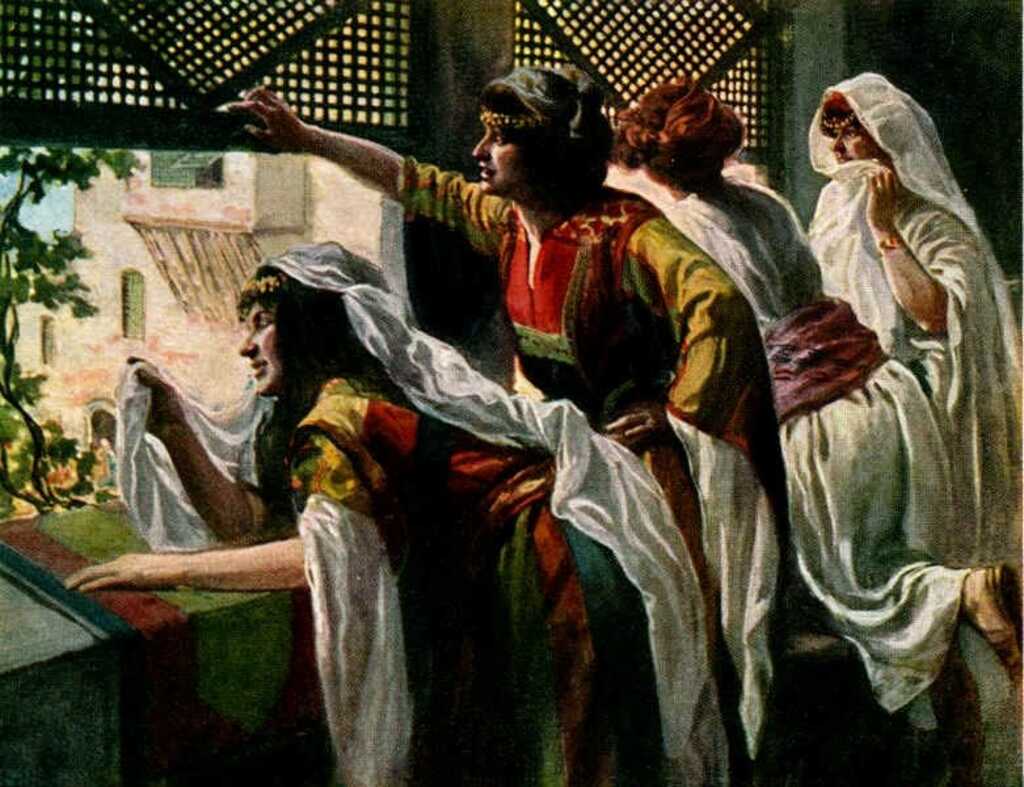
Sadly, his joyful dancing caused his wife Michal to despise him: “²⁹ It happened when the ark of the covenant of the Lord came to the city of David, that Michal the daughter of Saul looked out of the window and saw King David leaping and celebrating; and she despised him in her heart.” (1 Chr. 15:29; 2 Samuel 6:16). 

Michal was Saul’s daughter (1 Samuel 14:49). 

David previously married her as Saul’s carnal prize for killing 100 Philistines (1 Samuel 18:27). 

Yet, after David fled for his life, Saul gave her to a man named Palti to remove David’s claim to the throne (1 Sam. 25:44). 

Years later, Saul’s former general Abner offered to serve David. 

David then used Abner to kidnap his former wife Michal, even though she was remarried. 

David did this to strengthen his claim to the throne and to take back that which he felt belonged to him (2 Samuel 3:12-16). 

He also struggled with the sin of lust. 

Before arriving in Hebron, David had already replaced Michal with two wives (1 Samuel 25:43). 

During his seven-year reign in Hebron, he took four additional wives (2 Samuel 3:2-5). 

Michal became his seventh wife. 

After becoming King of Israel, David misused his power to take on even more wives and concubines (2 Samuel 5:13-14). 

Michal most likely resented David for kidnapping her from her then husband and forcing her to live as part of his harem. 

Based upon her experience watching Saul as king, she also did not find his joyful dancing to be the dignified acts that she expected from a king. 

She felt this way because there was no joy in her heart. 

She practiced idolatry (1 Samuel 19:13) and had no fellowship with God.

James Tissot (1836-1902) “Michal Despises David” (1898)


David reaped the consequences of the deeds of the flesh that he sowed

Moses expressly warned that it was against God’s law for a king to multiply his wives: “17 He shall not multiply wives for himself, or else his heart will turn away; . . ..” (Deuteronomy 17:17(a)). 

The New Testament is also clear that a man should have only one wife (Matthew 19:4-6; 1 Timothy 3:2). 

When we long for the things of the flesh, God will eventually give us over to our lusts (Romans 1:28). 

Her resentment toward David was a consequence of sins of the flesh.


True worship includes forgiveness. 

Michal had many reasons to resent David. 

Her complaints about his dancing merely exposed her inner feelings about him. 

Yet, her worship needed to include forgiveness. 

God warned His people not to hold grudges against each other: ‘“You shall not take vengeance, nor bear any grudge against the sons of your people, but you shall love your neighbour as yourself; I am the LORD.”’ (Lev. 19:18). 

Believers are called upon to be God’s holy priesthood today (1 Peter 2:5). 

As part of His holy priesthood, you too are called upon to set an example in worship by not holding grudges and by forgiving your enemies (Matthew 22:39; Mark 12:31; Luke 10:27; John 13:34; Romans 12:19; 13:19). 

Are you showing forgiveness and love to those who hurt you?


Forgive those who cause you harm

Joseph showed that he was Spirit-led when he forgave his brothers for selling him into slavery (Genesis 50:20). 

Jesus also forgave the people who betrayed Him and crucified Him (Luke 23:34). 

You are also likely to encounter people who will cause you harm. 

Jesus calls upon you to love and forgive these people. 

“But I say to you, love your enemies and pray for those who persecute you,” (Matthew 5:44; 6:14). 

Forgiving an enemy is a hard thing to do. 

Yet, this is what Jesus expects from you. 

Is there anyone who has wronged you that you need to forgive?


If you don’t forgive others, you are unlikely to experience Jesus’ fellowship

Jesus warns: “But if you do not forgive others, then your Father will not forgive your transgressions.” (Matthew 6:15; Mark 11:26). 

“And his master was angry, and delivered him to the torturers until he should pay all that was due to him. My heavenly Father will also do the same to you, if each of you does not forgive his brother from your heart.” (Matthew 18:34-35). 

Unforgiveness will not cause you to lose your salvation. 

But unforgiveness is a weight that may prevent you from experiencing Jesus’ true fellowship and blessings.


1 Chronicles 14: Lessons From David’s Faithful Example Regarding Blessings that God Offers to All Believers

 1 Chronicles 14: Lessons From David’s Faithful Example Regarding Blessings that God Offers to All Believers

Introduction

1 Chronicles 14 records some of the events of 2 Samuel 5, when David became king. 

Here, Chronicles focuses on God’s blessings upon David as God’s anointed king. 

David received these blessings through his faith, his obedience, and God’s grace. 

From David’s example, God reveals seven blessings that He makes available to all believers. 

These include: 

(1) success, 

(2) fertility, 

(3) courage, 

(4) victory, 

(5) holiness, 

(6) guidance, 

and (7) honor.


First, after a foreign king from within the Promised Land submitted to David as king, David realized that God had blessed him with all the things that he would need to be a successful king. When you live by faith, God will also bless you with all that you need to be successful for Him. 

Second, in his moment of triumph, David misused God’s blessings to take on multiple wives and concubines. Yet, out of God’s grace, He blessed David with many children. If it is God’s will, He will also bless you with fertility out of His grace. 

Third, because David had faith, he faced his enemies with courage. If you have faith, God will also bless you with courage in the face of trials or tribulations. 

Fourth, when the Philistines attacked David’s forces, David cried out to God in faith, and God defeated the Philistines. When you walk in faith like David, God may also grant you victory over your enemies. 

Fifth, after David seized the Philistines’ idols, he burned them. David rejected the customs of the day, which would have allowed him to keep the idols. God blessed David’s desire for purity with His holiness. If you have faith and seek to be pure, God will also bless you with His holiness. 

Sixth, when the Philistines gathered to attack the Jews, David asked for and received God’s guidance. From David’s example, God reveals that He will bless you with His guidance when you diligently seek His will. If you have faith, God will also bless you with guidance. 

Finally, because of his faith, even David’s enemies respected him. If you are faithful and obey, God will also bless you with honor and respect.


1. Success: If It is God’s Will, He Will Bless You With Success For Him

1 Chr. 14:1-2.

God blessed David with everything he needed to succeed as king. 

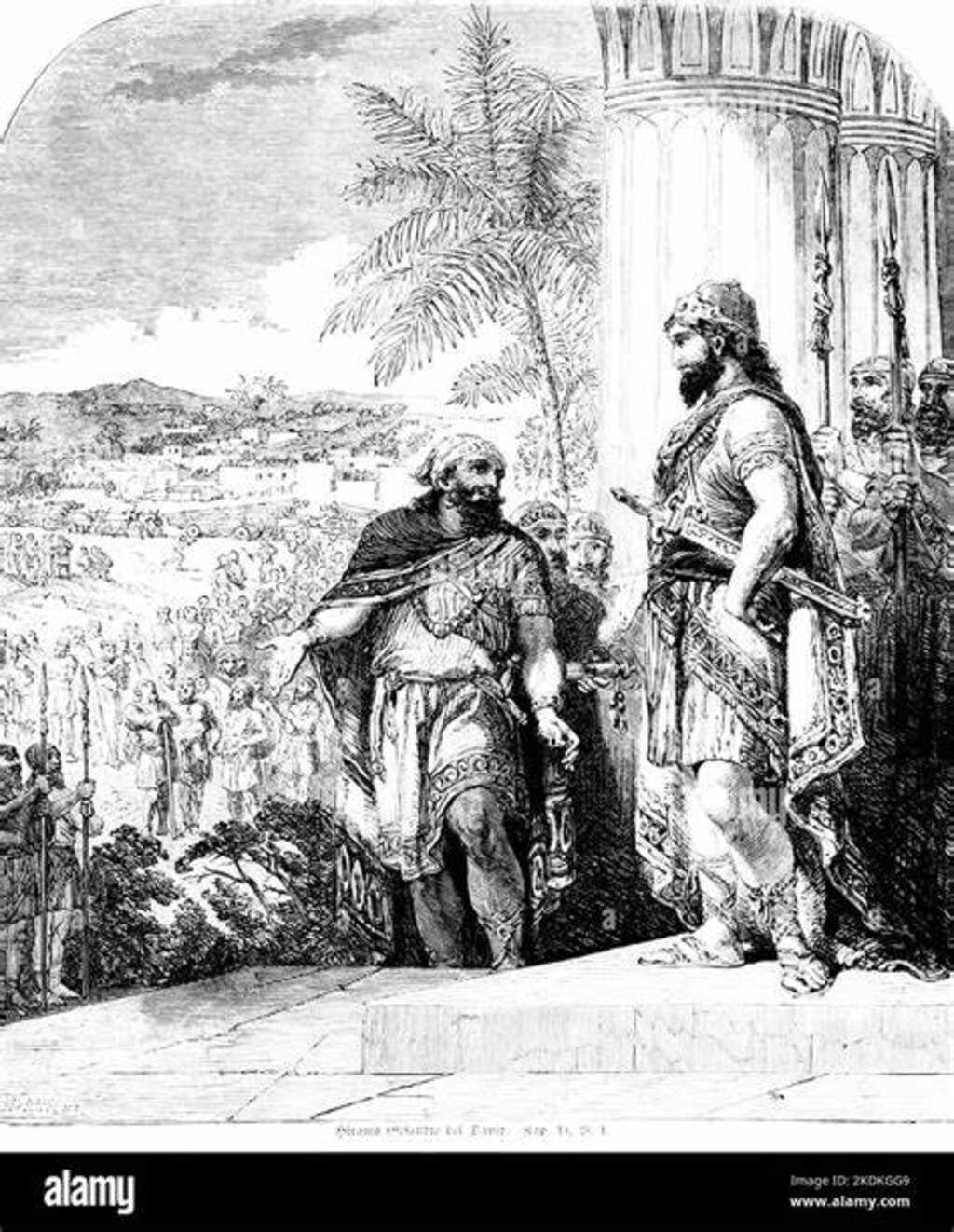
As evidence of God’s blessings, a king in modern Lebanon submitted to David. David showed himself to be God’s servant by giving Him the credit: “1 Now Hiram king of Tyre sent messengers to David with cedar trees, masons and carpenters, to build a house for him. 2 And David realized that the Lord had established him as king over Israel, and that his kingdom was highly exalted, for the sake of His people Israel.” (1 Chr. 14:1-2; 2 Sam. 5:11-12). 

God previously allocated the city of Tyre in Southern Lebanon as part of the inheritance of the tribe of Asher and as the northern border of the Promised Land: “The border turned to Ramah and to the fortified city of Tyre; . . .” (Josh. 19:29). 

The Jews had shown a lack of faith to claim this territory. 

Yet, even though the Jews were unfaithful, God remained faithful to His promises by giving this territory to David. 

David realized that God had blessed him with all of the resources that he would need to unify the nation for God.


King Hiram of Tyre sends messengers to pay tribute to King David 


When you walk with faith-led obedience, God can bless you with success

If a country is obedient to God, He promises to exalt that country above other nations. “1 Now it shall be, if you diligently obey the Lord your God, being careful to do all His commandments which I command you today, the Lord your God will set you high above all the nations of the earth. 2 All these blessings will come upon you and overtake you if you obey the Lord your God: . . .6 Blessed shall you be when you come in, and blessed shall you be when you go out.” (Dt. 28:1-2, 6). The words “when you come in” and “when you go out” is a literary expression called a “merism.” By stating that the Jews will be blessed when they come in and when they go out, God was promising to bless them in all that they did. For example, as a result of the obedience that came from Abraham’s faith, he was blessed with success in everything he did, even in his old age (Gen. 24:1). Likewise, as a result of his faith and obedience during his testing, God rewarded Job by allowing him to live to be 140 (Job 42:16). God also rewarded David for his faith by blessing the nation of Israel with all the tools that the nation would need to succeed.


God blesses you for His glory and not your own

David showed himself to be a Spirit-led king by giving God the credit for his blessings and by realizing that His blessings were not meant to glorify David (1 Chr. 14:2; 2 Samuel. 5:12). 

David knew that they did not deserve God’s blessings. 

Thus, he frequently offered God songs of thanksgiving: “. . . To you I shall offer a sacrifice of thanksgiving, and call upon the name of the Lord, I shall pay my vows to the Lord.” (Psalm 116:1, 17-18). 

“ . . . I will render thank offerings to You. For you have delivered my soul from death.” (Ps. 56:12-13; 116:8). 

“. . . Let them also offer sacrifices of thanksgiving, and tell of His works with joyful singing.” (Ps. 107:1, 2, 22). 

“in everything give thanks; for this is God’s will for you in Christ Jesus.” (1 Thess. 5:18). 

“always giving thanks for all things in the name of our Lord Jesus Christ to God, even the Father;” (Eph. 5:20). 

Are you also giving God the credit for your blessings?


2. Fertility: If It is God’s Will, He Can Bless You With Fertility. 1 Chr. 14:3-7.

God blessed David with many children

Although David showed great faith and obedience, he failed to guard his heart in his success. As a result, he allowed his old temptations of the flesh to overcome him and take on more wives and concubines. God, however, showed grace in blessing David with many children: “³ Then David took more wives at Jerusalem, and David became the father of more sons and daughters. ⁴ These are the names of the children born to him in Jerusalem: Shammua, Shobab, Nathan, Solomon, ⁵ Ibhar, Elishua, Elpelet, ⁶ Nogah, Nepheg, Japhia, ⁷ Elishama, Beeliada and Eliphelet.” (1 Chr. 14:3-7; 2 Samuel. 5:13-14). 

Before arriving in Hebron, David had two wives (1 Samuel. 25:43). 

During his seven-year reign in Hebron, he took four additional wives (2 Samuel. 3:2-5). 

David then forced Abner to kidnap his former wife Michal and make her his seventh wife (2 Samuel. 3:12-16). 

Here, David expanded his number of wives and concubines further. 

God, however, still blessed him with many children.


God can also bless with fertility

God can also bless an obedient person or nation with fertility: “⁴ Blessed shall be the offspring of your body and the produce of your ground and the offspring of your beasts, the increase of your herd and the young of your flock.” (Deut. 28:4). 

With obedience: “He will love you and bless you and multiply you; He will also bless the fruit of your womb and the fruit of your ground, . . .” (Deut. 7:12-13). 

If you keep the Commandments, “you may live and multiply . . .” (Deut. 30:16). 

The Jews first left Israel as a clan of 70 people (Gen. 46:27). 

They spent approximately 400 years in captivity (Genesis. 15:13- “400”; Exodus. 12:40-“430”). 

After spending two years in the wilderness, God told Moses to assemble and count the men of fighting age who would invade the Promised Land (Numbers. 1:1). 

At that time, the men of fighting age totaled 603,550 (Numbers. 1:46). 

Although the Jews stagnated during their forty years in the wilderness, the tribes that were obedient still managed to grow. 

For example, the Manasseh tribe began with 32,200 fighting men (Numbers. 1:35). 

By the end of their 38-year-journey, their fighting men totaled 52,700 (Numbers. 26:34). 

This was an increase of 20,500 or 63.66%. 

A person can also be blessed with fertility when they are obedient. 

Hannah is one example (1 Samuel. 1:27). 

He can also multiply your endeavours for Him.


Don’t allow success to cause your guard to go down

David was at his best when he was threatened and forced to cling closely to God. By contrast, David’s greatest failures of his faith came during his times of success. During his times of success, he felt entitled to gratify the desires of his flesh and took more wives or concubines. His sense of entitlement would later grow and cause him to see no conflict in sleeping with Bathsheba while she was married to Uriah. He first lusted after her (2 Sam. 11:2). His secret lust later led him to commit adultery with her (2 Sam. 11:4). When his adultery led to Bathsheba’ pregnancy (and he could not convince her husband Uriah to sleep with her), he had Uriah killed to try cover his tracks (2 Sam. 11:14-17). 

Satan will exploit any opening that you give him. If you let your guard down when times are good, Satan will entrap you. Do you allow success or times of plenty to cause you to drop your guard?


God’s blessings of fertility are based upon His grace.

David never deserved God’s blessings. 

For three reasons, David’s actions violated God’s law. 

First, he violated God’s Tenth Commandment against coveting (Ex. 20:17; Dt. 5:21). 

Second, he violated God’s law against a leader having more than one wife: “¹⁷ He shall not multiply wives for himself, or else his heart will turn away; . . ..” (Deut. 17:17(a)). 

God always meant for marriage to be reserved for one man and one woman (Matt. 19:4-6; 1 Tim. 3:2). 

Third, to become king, David would have taken an oath to follow God’s law as an example for his people. He was further required to write a copy of God’s law in the presence of the priests to stay accountable (Deut. 17:18). 

By violating his oath to uphold God’s law, he took God’s holy name in vain and broke the Third Commandment (Exod. 20:7; Deut. 5:11). 

David’s sins showed that God’s blessings of fertility were based upon His grace alone.


God’s grace does not give believers a license to sin

When someone longs for the things of the flesh, God will eventually hand that person over to his lusts (Romans. 1:28). 

There can be no family peace when a man has more than one wife (Deut. 21:15-17). 

The consequences on the parents and the children is both misery and sorrow. 

For example, each of the children listed in these verses fought with each other and David for power and control. 

As a result of David’s later adultery, his health also suffered (Psalm. 38:3, 18). 

Thus, if you misuse God’s grace and sin, you will likely experience anguish and sorrow.


3. Courage: If You Have Faith, God Will Bless You With Courage. 1 Chr. 14:8.

God blessed David with a spirit of courage

As evidence of both God’s grace and David’s faith-led obedience, God also blessed David with courage: “8 When the Philistines heard that David had been anointed king over all Israel, all the Philistines went up in search of David; and David heard of it and went out against them.” (1 Chr. 14:8; 2 Sam. 5:17.) 

When he trusted God, David did not fear any enemy or challenge.


God can also bless you with a Spirit of courage

God’s blessing of courage is a gift that He wants to give to everyone who serves Him. 

When you have faith, He can also bless you with courage. “For God has not given us a spirit of timidity, but of power and love and discipline.” (1 Tim. 1:7). 

“For you have not received a spirit of slavery leading to fear again, but you have received a spirit of adoption as sons by which we cry out, ‘Abba! Father!’” (Romans. 8:15). 

If you are under attack, cry out for the Spirit’s strength.


Be encouraged and strengthened by the Spirit

God knows when your faith is weak. 

When you let His Spirit lead you, He will encourage and strengthen you: “Finally, be strong in the Lord and in the strength of His might.” (Ephesians. 6:10). 

“On the day I called, You answered me; You made me bold with strength in my soul.” (Psalm. 138:3). 

“He said, ‘O man of high esteem, do not be afraid. Peace be with you; take courage and be courageous!’ Now as soon as he spoke to me, I received strength and said, ‘May my lord speak, for you have strengthened me.”’ (Daniel. 10:19). 

“For all who are being led by the Spirit of God, these are sons of God.” (Romans. 8:14). 

If you are feeling weak or depressed, are you praying in faith for Him to strengthen and encourage you?


4. Victory: If You Have Faith, God Can Also Bless You With His Victory. 1 Chr. 14:9-11.

God blessed David with victory over his enemies. 

Although David did not deserve God’s blessings, God also gave David grace on the battlefield. 

When David enquired in faith after the Philistines threatened him, God promised David victory if he went out to confront them: “ ⁹ Now the Philistines had come and made a raid in the valley of Rephaim. ¹⁰ David inquired of God, saying, ‘Shall I go up against the Philistines? And will You give them into my hand?’ Then the Lord said to him, ‘Go up, for I will give them into your hand.’ ¹¹ So they came up to Baal-perazim, and David defeated them there; and David said, ‘God has broken through my enemies by my hand, like the breakthrough of waters.’ Therefore they named that place Baal-perazim.” (1 Chr. 14:9-11; 2 Samuel. 5:18-19). 

Because of David’s faith, God was faithful to keep His Word

The name “Baal-perazim” is literally translated as the “possessor (or lord) of breaches.” 

God can defeat any stronghold of the enemy in your life. 

With God on his side, David’s soldiers cut through the enemy like water. 

“What then shall we say to these things? If God is for us, who is against us?” (Romans 8:31). 

If you face a difficult test or an adversary, trust God and have faith in Him to protect you from danger.


When you walk in faith, God will defeat your enemies

David became great because “greater and greater, for the Lord God of hosts was with him.” (2 Samuel 5:10). 

The “Lord of hosts” was one of God’s many names: “Who is this King of glory? The LORD of hosts, He is the King of glory. Selah.” (Psalm 24:10). 

In a pre-incarnate appearance to Joshua, Jesus revealed Himself to be the “Lord of hosts”. 

“He said, ‘No; rather I indeed come now as captain of the host of the LORD.’ And Joshua fell on his face to the earth, and bowed down, and said to him, ‘What has my lord to say to his servant?’” (Josh. 5:14). 

When the Jews walked in faith and obedience, the Lord of Hosts promised them victory (Lev. 26:7-8; Ex. 23:22; Nu 10:9, 35; Isa. 54:17; Gen. 22:17). 

“7 The Lord shall cause your enemies who rise up against you to be defeated before you; they will come out against you one way and will flee before you seven ways.” (Deut. 28:7). 

For those who are obedient and take refuge in God in the face of the enemy, He promises to be a shield against the enemy’s fiery darts: “He is a shield to those who take refuge in Him.” (Prov. 30:5(b); 2 Sam. 22:31). 

For example, God used Gideon’s army of 300 soldiers to kill 120,000 enemy Midianites (Judges 7:16-22; 8:10). 

God also helped Jonathon kill 20 enemy soldiers (1 Samuel 14:14). 

Likewise, it was God’s blessing that allowed David to kill Goliath (1 Samuel 17:50-58) and the Philistines (1 Samuel 18:5-6, 13-16, 27-30). 

If you will walk in faith-led obedience, Jesus Christ, the Lord of Hosts, will also defeat your enemies.


5. Holiness: If You Have Faith, God Can Also Bless You With His Holiness. 1 Chr. 14:12.

God blessed David with the desire to be holy, separated from evil

After God granted him victory, David immediately destroyed the idols of the Philistines: “12 They abandoned their gods there; so David gave the order and they were burned with fire.” (1 Chr. 14:11-12; 2 Samuel 5:21). 

David’s men then acted faithfully and took away and destroyed the idols of the Philistines. 

David desired God’s purity even though he was a sinner. 

Because he tried to be pure, God poured out His holiness upon him.


Be holy in your walk

The standard in David’s time was for a king to take the idols of a defeated enemy. 

Yet, David held himself to God’s standards, not the world’s standards. 

You must hold yourself to God’s standards, even when everyone else fails to follow them: “For I am the LORD your God . . . be holy, for I am holy.” (Lev. 11:44). 

“Be holy because I, the LORD your God, am holy.” (Lev. 19:2). 

“You are to be my holy people.” (Exod. 22:31). 

“for it is written: ‘Be holy, because I am holy.’” (1 Peter 1:16). 

Jesus is the light of the world today (John. 8:12). 

His light burns inside you as a beacon for those around you (Matt. 5:14). 

In turn, you are commanded to share the hope that lies within you (1 Peter 3:15; Matthew 28:19-20). 

You are also an “ambassador” for Christ (2 Corinthians 5:20). 

When you aspire to be pure, God will bless you with His holiness.


Destroy the idols in your life

The Jews were warned not to keep any of the idols that they plundered. 

“Then you shall gather all its booty into the middle of its open square and burn the city and all its booty with fire as a whole burnt offering to the LORD your God; and it shall be a ruin forever. It shall never be rebuilt.” (Dwut. 13:16). 

“But as for you, only keep yourselves from the things under the ban, so that you do not covet them and take some of the things under the ban, and make the camp of Israel accursed and bring trouble on it. But all the silver and gold and articles of bronze and iron are holy to the LORD; they shall go into the treasury of the LORD.” (Josh. 6:18-19). 

The anger of God “burned” against all of Israel when one man named Achan kept idols after God defeated Jericho (Josh. 7:1). As a result of this one man’s actions, the Jews lost the first battle of Ai (Josh. 7:2-5). If God blesses you, He does not want you to use His mercy and grace as an excuse to embrace the idols of the flesh. 

Even if an idol of the flesh does not cause you to stumble, your actions can cause others to stumble.


Hezekiah also had the faith to destroy idols when every king after David failed to do so. 

David was sadly the last king for hundreds of years who was willing to smash the idols of the Canaanites. 

After David, every future king until Hezekiah tolerated idols. 

Like David, Hezekiah smashed the pagan idols in Judah, and he restored proper worship both in the Temple and throughout the country (2 Chron. 32:12; 31:20; 30:1-27; 29:2-36). 

Because he had the faith and obedience to smash pagan idols, God praised Hezekiah (2 Kgs. 18:3). 

Besides David and Hezekiah, only two other kings had this honor.

 Another was Josiah (2 Kings 22:2). 

Asa also held this honor at the beginning of his reign (1 Kings 15:11). 

Yet, he then refused to remove the pagan high places, and he used the gold in the Temple to form an alliance with the Syrians against Northern Israel (1 Kings 15:14, 18-22). 

Thus, there are only two kings after David who can be considered to be holy throughout their reigns. 

God does not want you to look to the example of the world for holiness. .Instead, like David, seek after God’s heart.


6. Guidance: If You Have Faith, God Will Bless You With Guidance

1 Chr. 14:13-16.

God blessed David by guiding his steps

When the Philistines attacked again, God’s battle plan was very different from His first plan. 

Instead of attacking the enemy head on, He had the Jews win the battle through cunning strategy and surprise: “¹³ The Philistines made yet another raid in the valley. ¹⁴ David inquired again of God, and God said to him, ‘You shall not go up after them; circle around behind them and come at them in front of the balsam trees. ¹⁵ It shall be when you hear the sound of marching in the tops of the balsam trees, then you shall go out to battle, for God will have gone out before you to strike the army of the Philistines.’ ¹⁶ David did just as God had commanded him, and they struck down the army of the Philistines from Gibeon even as far as Gezer.” (1 Chr. 14:13-16; 2 Samuel 5:22-25). 

God planned to confuse the enemy with the sounds His angels created while marching on top of the balsam trees near the enemy encampment. 

But God’s plan was only revealed when David sought out His will through prayer. 

Here, God reveals that not every battle is the same. 

Believers must not only consult with God about what God wants them to do but also how He wants His will to be implemented. 

Believers must have the same faith-led obedience to implement God’s will.


David’s initial victories over the Philistines


Consult the Holy Spirit through the Word and prayer in all major decisions

David did not presume that God would automatically fight for him in any battle. 

He needed to first make sure that he was acting according to God’s will. 

God always rewarded David when he consulted with God before an attack on the Philistines. 

“So David inquired of the LORD, saying, ‘Shall I go and attack these Philistines?’ And the LORD said to David, ‘Go and attack the Philistines and deliver Keilah.’” (1 Samuel 23:2). 

Believers are also warned against the sin of presumption whereby they simply presume to know God’s will (James 4:13-17). 

“There is a way which seems right to a man, but its end is the way of death.” (Proverb 14:12). 

Today, Jesus has left you with His Word to guide your feet: “Your word is a lamp to my feet and a light to my path.” (Psalm 119:105; Proverb 6:23). 

“I know, O LORD, that a man’s way is not in himself, nor is it in a man who walks to direct his steps.” (Jeremiah 10:23). 

He has also left you the Holy Spirit to apply His Word: “I will ask the Father, and He will give you another Helper, that He may be with you forever;” (John 14:16, 26; 15:26; 16:7; Romans 8:26). 

He will also guide you in prayer when you seek wisdom: “But if any of you lacks wisdom, let him ask of God, who gives to all generously and without reproach, and it will be given to him.” (James 1:5). 

Are you seeking His guidance through the Word and prayer?


Be obedient to receive God’s full blessings in battle

Only after David obeyed God’s Word did he prevail in battle (1 Chr. 14:16; 2 Samuel 5:25). 

There are many times in the Bible where God gave instructions and then recorded how the Jews meticulously followed His instructions. 

By recording the details of their acts of obedience, He stresses the importance of being obedient to all of His commands for you, not just the ones that you like or agree with. 

When the Jews walked in obedience, they defeated every enemy that they faced. 

By contrast, they lost battles when they were disobedient. 

Today, Christians are no longer “under the law” in the sense that they must comply with it to be saved (Galatians 5:18; Romans 7:6; 8:3; Matthew 5:17). 

Yet, Jesus also says that, if we love Him, we will keep His commandments: “If you love Me, you will keep My commandments.” (John 14:15, 21; 15:10; 1 John 5:3; 2 John 1:6). 

Jesus is the great “I AM” who gave Moses the Ten Commandments at Mount Horeb (John 8:58; Exodus 3:14). 

His “disciples” were the “disciplined ones” in keeping His commandments. 

As bondservants or freed slaves, they were obedient out of love, not obligation. 

Whether you follow the law out of love instead of obligation is also a test for whether you really know Him: “By this we know that we have come to know Him, if we keep His commandments.” (1 John 2:3; 1 Corinthians 7:19). 

Is there any area in your life where you are being disobedient to God?


Don’t always expect a visible sign to discern God’s will

This battle plan also reveals that God does not always use a visible sign to show His will. 

On multiple occasions, God helped the Jews defeat their enemies through conventional military ambushes (Judges. 20:29, 32; Josh. 8:1-9; 2 Kings 7:12; 2 Chr. 13:13). 

He does not need to part the Red Sea or the River Jordan to show that He is fighting for you. 

He also may not work in the same way when He intervenes for you. 

But the basis for victory is always the same. It includes trusting and obeying God. 

When you are attacked, do you trust and obey Him?


Satan will use the same spiritual attacks against you until you change your response

God told David to wait until He drew the Philistines out of their hiding places. 

In a similar way, God told Joshua before the battle of Ai to draw out an enemy king before attacking him. (Josh. 8:1-9). 

Just as the Philistines used the same strategy to try to defeat the Jews, Satan will use the same strategy to entrap you until you change your response. 

If you put yourself in a place where you are weak, Satan will try to entrap you. 

Have you removed yourself from environments where Satan can easily tempt you?


Victory requires the body of Christ to work together

Just as there are different kinds of military campaigns, this battle reveals that there are different kinds of spiritual warfare as well. 

In some circumstances, the enemy can be rebuked through faith and prayer in Jesus’ name. 

Yet, there are many spiritual strongholds that cannot be broken without the help of other believers. 

This requires that churches have times of prayer and fasting in coordination with others to pray for the nation. 

Christians should also act together in the political arena to be salt and light in the world. 

As salt, the Church must sting in the wound of sin. 

Are you praying and fasting with others for the nation?


7. Honor: If You Are Faithful and Obey, God Will Bless You With Honor

1 Chr. 14:17.

God blessed David with honor and respect

Out of grace, God also blessed David with honor and respect, even amongst his enemies: “¹⁷ Then the fame of David went out into all the lands; and the Lord brought the fear of him on all the nations.” (1 Chr. 14:17). 

God allowed David these honors because David gave God the credit. 

Sadly, many believers receive this same blessing of respect and assume that they deserve the credit.


An obedient nation will be blessed with respect. God will also bless an obedient nation with fear or respect from its enemies: “¹⁰ So all the peoples of the earth will see that you are called by the name of the Lord, and they will be afraid of you.” (Deut. 28:10). 

When God was protecting His people, we see many examples of where other nations feared them. 

For example, Pharaoh feared God’s wrath when he almost took Abraham’s wife Sarah as his wife (Gen. 12:17-20). 

As another example, as the Jews prepared to invade the Promised Land, Rahab told Joshua’s two spies that the Canaanites feared the Jews and their God because God defeated Pharaoh’s army at the Red Sea and the armies of two different Amorite kings in Jordan (Josh. 2:10-11). 

After defeating the Amorites, the Jews traveled back to the plains of Moab where they stayed until God gave the word for Joshua to take them into the Promised Land (Numbers 22:1). 

There, the Moabites feared the Jews (Numbers 22:3-4). 

Their fear caused the Moabite King Balak to hire the sorcerer Balaam in an unsuccessful attempt to cast a spell on Israel (Numbers 22:7). 

The kings of Canaan again feared the Jews and their God when they invaded. 

The Canaanites “heard how the LORD had dried up the waters of the Jordan before the sons of Israel until they had crossed, that their hearts melted, and there was no spirit in them any longer because of the sons of Israel.” (Josh. 5:1). 

“Then the chiefs of Edom were dismayed; the leaders of Moab, trembling grips them; all the inhabitants of Canaan have melted away. Terror and dread fall upon them; by the greatness of Your arm they are motionless as stone; until Your people pass over, O LORD, until the people pass over whom You have purchased.” (Exodus 15:15-16). 

All who oppose Israel are subject to the curse that God promised to Abraham (Gen. 12:3). 

Today, the nations that surround Israel again fear it because God has blessed it. 

Nations who fight against Israel should not expect God’s blessings.


An obedient nation will be exalted over other nations

If a country is obedient to God, He promises to exalt that country above other nations. 

¹ Now it shall be, if you diligently obey the Lord your God, being careful to do all His commandments which I command you today, the Lord your God will set you high above all the nations of the earth. ² All these blessings will come upon you and overtake you if you obey the Lord your God:” (Deut. 28:1-2).

 With obedience to His Commandments, “He will set you high above all nations which He has made, for praise, fame, and honor; and that you shall be a consecrated people to the LORD your God, as He has spoken.” (Deut. 26:19). 

When David was obedient to God, God blessed his entire kingdom by exalting it above the nations: “And David realized that the LORD had established him as king over Israel, and that his kingdom was highly exalted, for the sake of His people Israel.” (1 Chron. 14:2). 

As a result of the obedience that came from his faith, God also turned Abraham’s descendants into a great nation: “And I will make you a great nation, and I will bless you, and make your name great; and so you shall be a blessing.” (Gen. 12:2).


God’s promise that you will find peace with certain enemies

When you walk with God, He promises that even your enemies will be at peace with you: “When a man’s ways are pleasing to the LORD, He makes even his enemies to be at peace with him.” (Proverb. 16:7). 

“Who is there to harm you if you prove zealous for what is good?” (1 Peter. 3:13). 

If you find yourself in constant conflict with others, are you looking at your own walk?